There are many different types and grades of ion exchange resin used for a wide range of industrial and commercial applications. This article focuses specifically on the resins most commonly used in water and wastewater treatment. It is not exhaustive but is intended to provide a clear overview of ion exchange resin types and their practical uses.
Ion exchange resins are first divided into two primary categories:
Cation resins carry a negative charge and attract positively charged ions such as sodium Na+ and calcium Ca2+.
Anion resins carry a positive charge and attract negatively charged ions such as chlorides Cl- and sulphates SO42-.
Both cation and anion resins can also be further classified into strong and weak forms.
Strong resins are capable of splitting both strongly and weakly dissociated salts. Weak resins can only split weakly dissociated salts.
For example, calcium sulphate is a strong salt and can only be effectively split by a strong acid cation resin. Calcium bicarbonate is less strongly bonded and can therefore be split by a weak acid cation resin.
This distinction is important because certain contaminants can bind so firmly to strong resins that regeneration becomes difficult or inefficient over time. Weak resins may require less chemical regeneration and can therefore improve operational efficiency in specific applications.
One of the most common applications of ion exchange water treatment is water softening. Water hardness is caused by calcium and magnesium ions associated with sulphates, carbonates and bicarbonates. These hardness salts can form scale when water is heated or concentrated, such as in boilers or reverse osmosis feed systems.
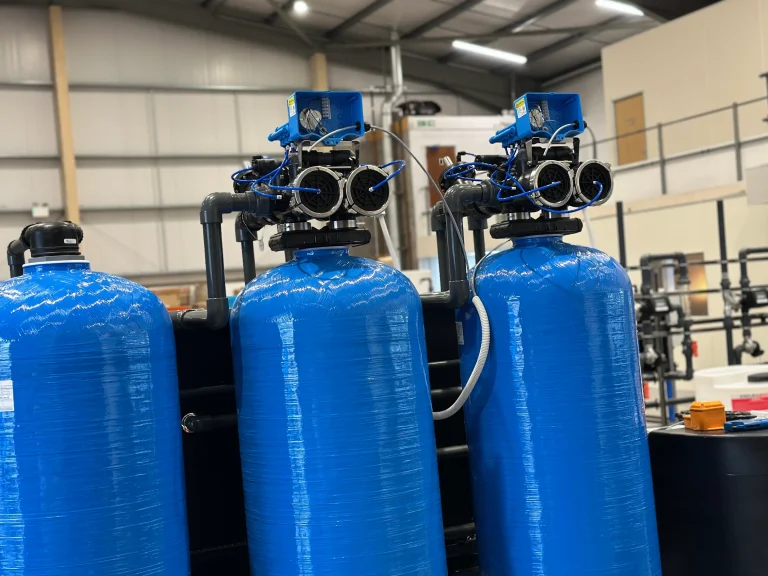
A strong acid cation resin operated in the sodium form is typically used to soften water. In this process, sodium ions are exchanged for calcium and magnesium ions. Sodium salts do not form scale, making softened water advantageous in heated or high-concentration environments.
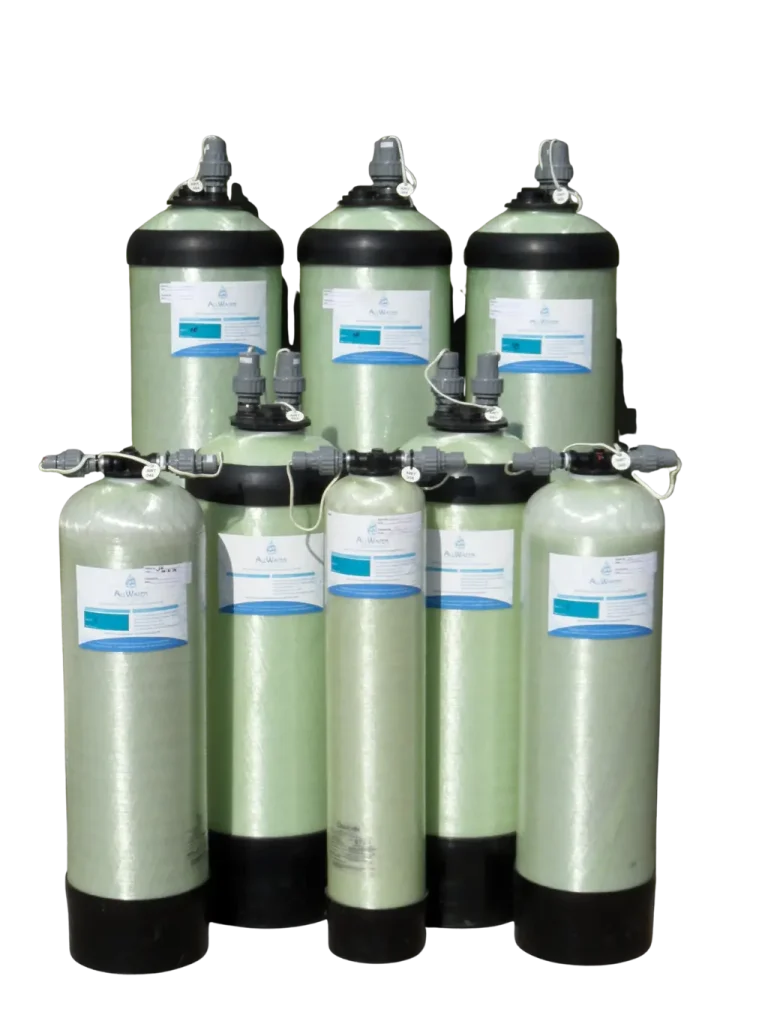
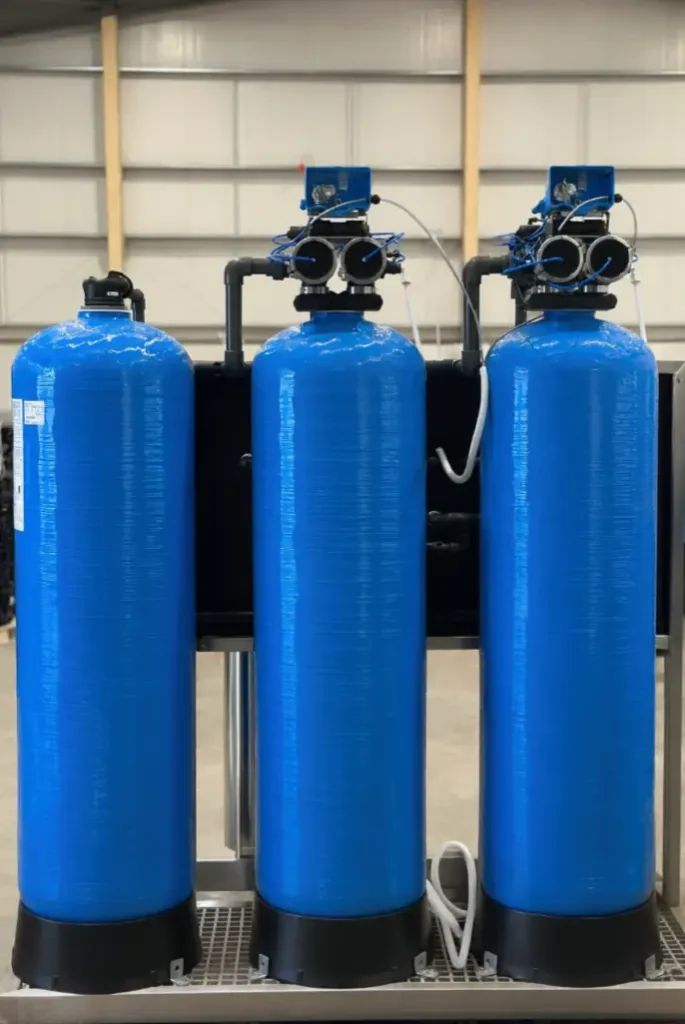
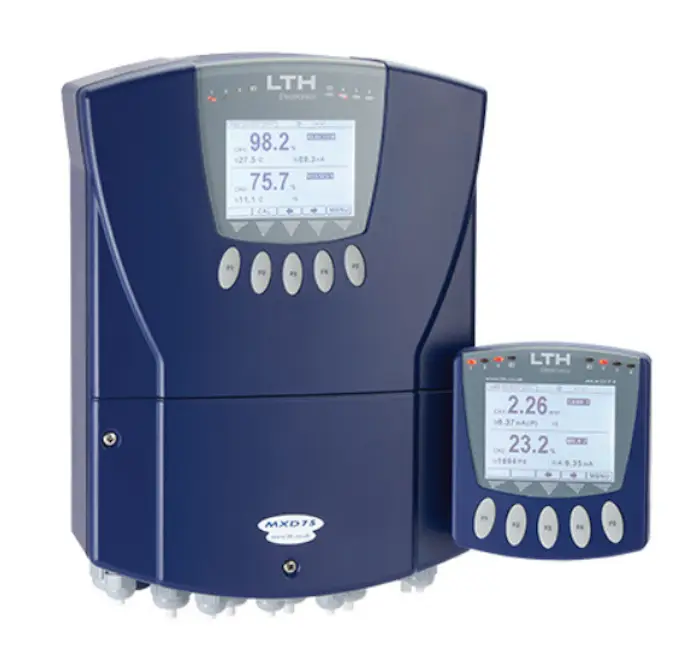
Ion exchange resins have a finite capacity and require regeneration once exhausted. In water softening systems, a concentrated brine solution is passed through the resin to release calcium and magnesium ions and return the resin to the sodium form. Regeneration is usually triggered by volume throughput, although online hardness monitoring may also be used.
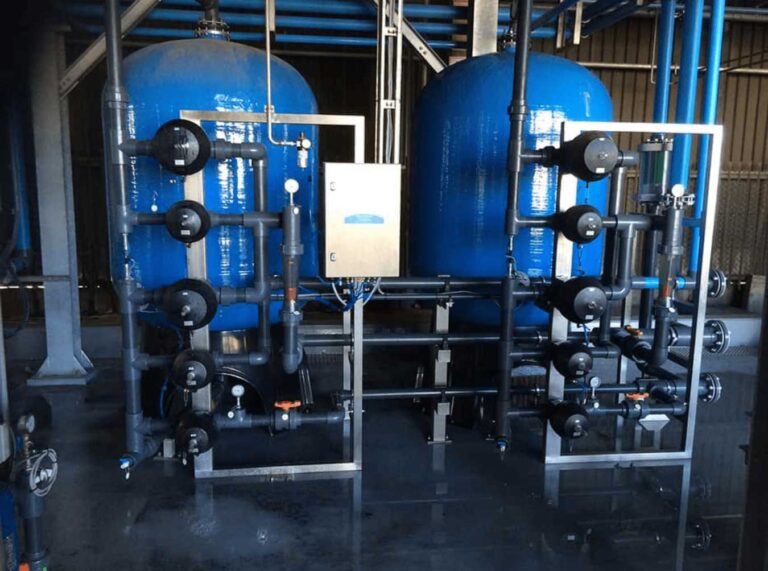
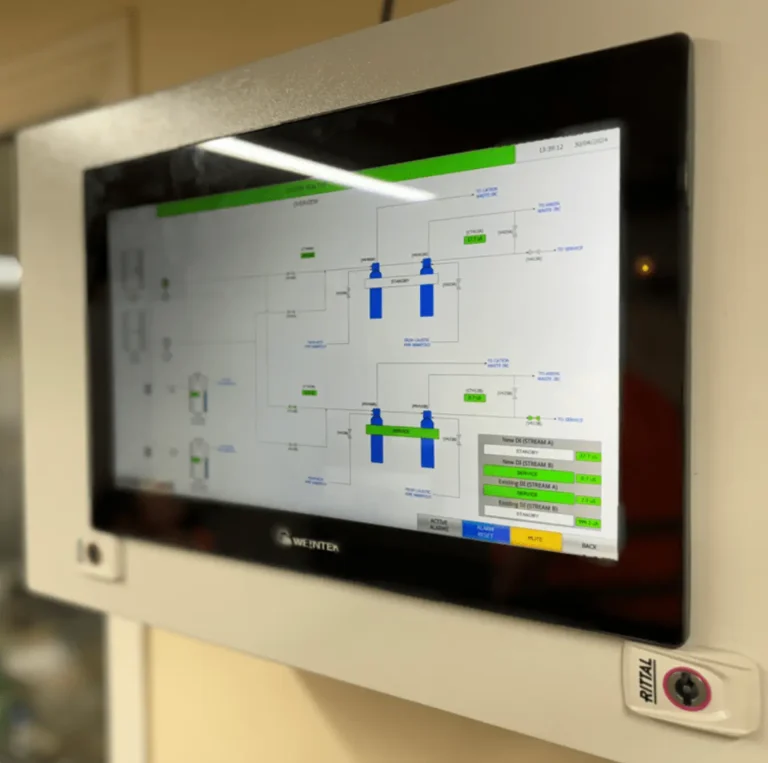
For demineralised or deionised water production, both cation and anion resins are used in sequence. Water first passes through the cation vessel, where ions such as calcium, magnesium and sodium are replaced with hydrogen ions. It then flows through the anion vessel, where sulphates, carbonates and chlorides are replaced with hydroxyl ions.
The hydrogen and hydroxyl ions combine to form pure water H2O.
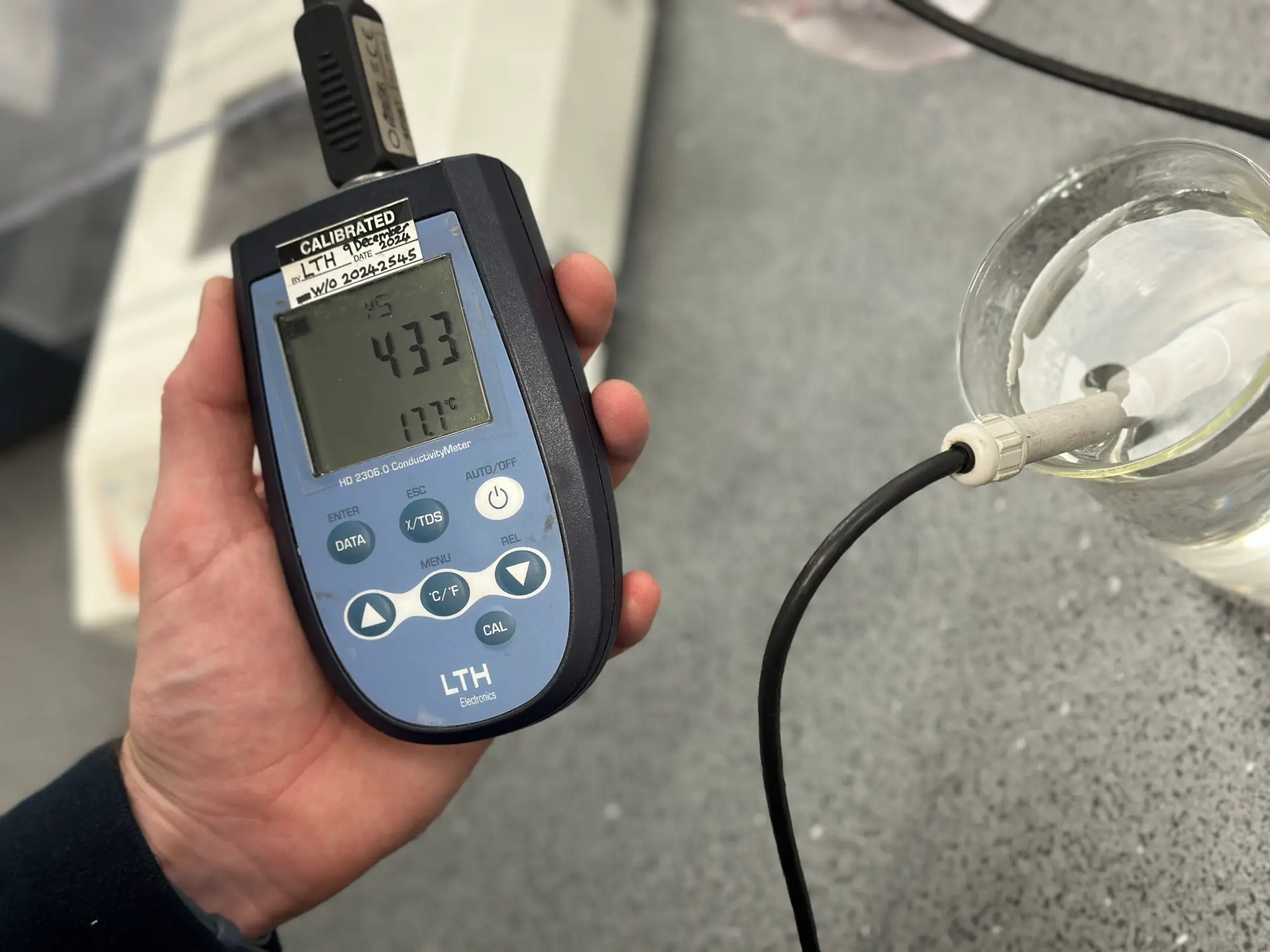
In demineralisation systems, conductivity monitoring is typically used to detect resin exhaustion and trigger regeneration. Cation resins are usually regenerated with hydrochloric acid, while anion resins are regenerated with sodium hydroxide.
Ion exchange resins can also be categorised by structure:
Gel type resins have a compact structure that swells in water. They often provide higher capacity but are more susceptible to organic fouling and osmotic shock.
Macroporous resins have a more open, sponge-like structure. They offer higher mechanical strength and better resistance to organic fouling, making them suitable for applications where organic contamination is common, such as metal finishing rinse water recovery.
Standard grade resins usually have bead sizes between 0.3 and 1.2 mm, which is suitable for most water treatment applications.
Mono grade resins are more uniform in size, typically around 0.5 to 0.6 mm. This uniformity allows for lower pressure loss, faster ion exchange kinetics, reduced chemical usage and shorter contact times. Mono grade resins also rinse more quickly after regeneration, reducing water consumption.
Although mono grade resins are more expensive, they are often used in high-performance or short cycle regeneration systems.
Shallow shell resin is a more recent development in ion exchange technology. In these resin beads, only the outer shell contains functional groups while the inner core remains inert.
This design reduces fouling, shortens diffusion paths and decreases the amount of chemical required for regeneration, often by up to 30 percent. Rinse water usage can also be reduced by up to 50 percent. The reduced bead expansion also helps protect against osmotic shock.
Chelating resins are specialised ion exchange resins designed with functional groups that have a strong affinity for heavy metals such as copper, zinc and nickel.
These resins can remove metals effectively even in the presence of high background contaminants that would typically hinder removal with conventional resins. For example, wastewater from metal finishing processes often contains high calcium levels following lime neutralisation. A chelating resin will preferentially bind heavy metals and can achieve removal to very low parts per billion levels, even in low pH conditions.
Choosing the correct ion exchange resin depends on water composition, treatment goals and operational efficiency requirements. Understanding the differences between cation and anion resins, strong and weak functionality, structural design and specialist options such as chelating or shallow shell technology is essential for effective water and wastewater treatment performance.
We’re here to help with all your water treatment needs. Whether you have questions about our services, want to discuss a project, or need support, our team is ready to assist you. Fill out the form for general enquiries, or you are welcome to email direct or give us a call.
Unit 2,
Cheddar Business Park,
Wedmore Road,
Cheddar
BS27 3EB
Mon-Fri: 08:30-17:30 (GMT)